
Surfaces Corrected to Factory-Match Standards
Vehicle Painting and Refinishing in Mandan for automobiles showing faded coatings, collision repair areas, or oxidized finishes requiring color restoration
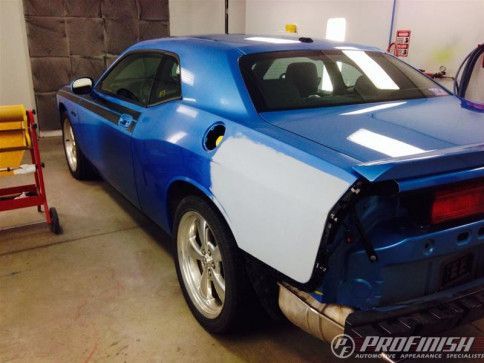
Paint oxidation from North Dakota sun exposure, clear coat delamination after years of temperature cycling, and color mismatch following poorly blended prior repairs create uneven gloss levels and hue variations that degrade vehicle appearance and protective coating integrity. ProFinish uses spectrophotometer readings to measure existing paint color rather than relying on outdated factory codes that don't account for weathering, then formulates spray mixtures that match the current finish under both direct sunlight and indoor fluorescent lighting conditions. The refinishing process removes damaged coatings down to stable substrate layers, applies corrosion-resistant primers, builds color depth through multiple base coat passes, and seals surfaces with UV-stabilized clear coat that resists the accelerated degradation North Dakota's seasonal temperature swings cause in lower-grade products.
Surface preparation determines refinishing durability more than the paint itself—the shop sands panels to specific grit progressions that create mechanical adhesion without visible scratch patterns, fills minor imperfections using catalyzed polyester compounds that cure harder than surrounding metal, and removes all sanding dust and surface oils with solvent wipes before entering the spray booth. Panel painting addresses localized damage on individual fenders, doors, or bumpers with blending into adjacent areas, while complete repaints strip all exterior surfaces and refinish the vehicle as a single color-matched unit.
Schedule a refinishing consultation to review paint condition and discuss repair scope for damaged or faded panels.
Why Color Matching Requires Multi-Stage Verification
Factory paint codes specify mixing ratios for new vehicles, but after years of sun exposure and environmental contamination, the actual surface color shifts toward lighter or more muted tones that factory formulas no longer match. The shop measures color using a spectrophotometer that captures reflectance data across multiple points on undamaged panels, then adjusts tint ratios until test spray cards match these readings rather than the outdated code. This approach prevents the common problem of refinished panels appearing noticeably darker or more saturated than surrounding original paint, particularly visible on metallic and pearl finishes where flake orientation affects color under different viewing angles.
After refinishing completes, panels reflect light uniformly without orange peel texture, fisheyes from contamination, or dry spray roughness caused by incorrect spray gun settings. You'll notice that repaired areas blend invisibly into existing paint with no detectable edge where new clear coat meets old, and the gloss level matches across all surfaces when viewed in direct sunlight. ProFinish verifies these quality indicators using cross-checking under varied lighting before final delivery, since paint defects often appear only under specific angles or light temperatures.
The service addresses scratches through multi-stage sanding and polishing when damage has not penetrated the clear coat, chips with primer and base coat touch-up followed by clear coat blending, and full-panel refinishing when damage covers large areas or when color fade requires complete recoating. Paint correction removes swirl marks, oxidation haze, and minor surface scratches through controlled abrasive polishing, restoring gloss without adding new coatings.
Vehicle Painting and Refinishing Details
Paint quality and refinishing methods affect how long restored surfaces resist weathering and maintain appearance across Bismarck and Mandan driving conditions.
How does surface preparation affect refinishing longevity?
Proper sanding creates microscopic peaks that mechanical bond with primer layers, while inadequate prep leaves smooth substrates that allow new coatings to peel under temperature cycling. The shop progresses through 180-grit to remove old paint, 320-grit for primer adhesion, and 600-grit for final smoothing, with each stage removing scratches from the previous step.
What causes paint to fade faster on some panels than others?
Horizontal surfaces like hoods and roofs receive more direct UV exposure than vertical doors and fenders, accelerating clear coat breakdown and color pigment degradation. North Dakota's intense summer sun and high-altitude UV levels worsen this effect compared to lower elevations or cloudier climates.
Can refinishing repair clear coat delamination without repainting the base color?
If the base coat remains intact and only the clear layer has failed, the shop can sand away the damaged clear coat and apply fresh clear layers without disturbing the color underneath. This approach saves time and cost when oxidation has only affected the top protective layer.
What's included in complete vehicle repainting versus panel painting?
Complete repaints involve removing or masking all trim, glass, and non-painted components, then refinishing every exterior surface for uniform color and gloss. Panel painting refinishes individual damaged areas and blends into adjacent sections, leaving undamaged panels untouched.
Do you refinish motorcycles and trucks using automotive paint systems?
The shop refinishes cars, trucks, SUVs, motorcycles, and luxury vehicles using paint products formulated for each substrate type—flexible additives for plastic bumpers, corrosion inhibitors for bare metal, and specialized hardeners for high-heat engine components on motorcycles.
ProFinish restores vehicle finishes through panel painting, complete refinishing, and paint correction services using color-matched formulations and multi-stage surface preparation. Contact the shop in Bismarck or Mandan to request a free refinishing estimate based on your vehicle's current paint condition.